What are the Most Common Construction Supplies Used in Decorative Builds
What are the most common construction supplies used in decorative builds?
- Metal work
- Decorative concrete and masonry
- Wood and engineered timber
- Plastics and polymers
- Glass
Overview
- Decorative construction relies on carefully selected materials that balance structural performance, design requirements, and long-term functionality.
- From metal, concrete, and timber to polymers and glass, each construction material serves a specific purpose in enhancing the strength, appearance, and efficiency of decorative builds.
- Understanding the role of these common construction supplies helps ensure better project outcomes, and partnering with a trusted supplier like Metal Exponents provides reliable materials for quality construction.
In any decorative construction project, material selection is crucial to achieving both structural performance and design intent. The most common construction supplies used in decorative builds typically include a combination of metal, concrete, wood, glass, and polymer-based materials. Each material serves specific functional and aesthetic purposes.
Since they behave differently in real-world applications, they are not chosen arbitrarily. Instead, they are specified based on load requirements, environmental exposure, fabrication constraints, and the architectural vision of a project.
In this article, we highlight the most commonly used construction materials and how they can enhance the functionality, aesthetics, and structural integrity of modern decorative builds.
Metal Work
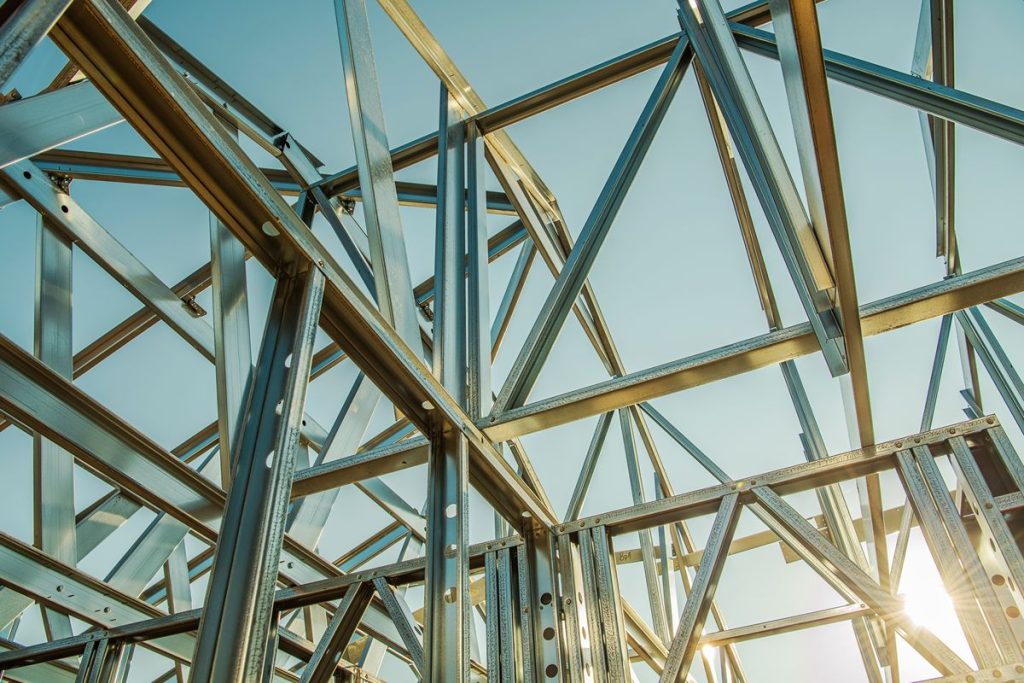
In decorative builds, metal components are commonly used to form frameworks that support both load-bearing and non-load-bearing elements. Their mechanical strength allows them to perform consistently under varying stress. They are a reliable material for foundational construction projects. Working with a trusted steel supplier such as Metal Exponents also helps ensure that structural metal components meet the quality and specification requirements of decorative construction projects.
Common construction supplies under metal work typically include:
- Steel Plates: Commonly applied in columns, beams, and heavy-load connection points where added strength and stability are required.
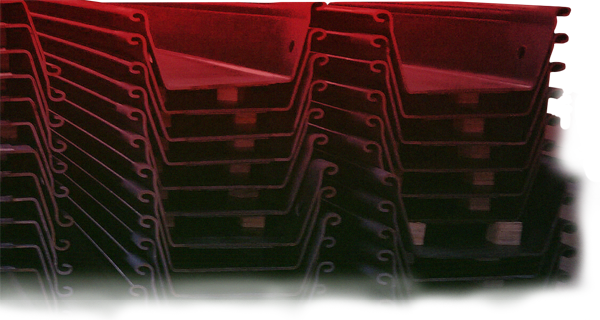
- Sheet Piles: Driven into the ground to provide lateral earth support and prevent soil or water movement during construction works.
- Steel Channels: Often incorporated into building frameworks where consistent load distribution and structural alignment are needed.
- Steel Angles: Usually applied in trusses, frames, and joint reinforcements due to their ability to provide stability in angled or corner connections.
Decorative Concrete and Masonry
Concrete and masonry materials allow you to create both structural and aesthetic elements through controlled casting, layering, and finishing techniques. Their versatility in texture and form makes them essential in achieving visual depth and material contrast in built environments.
The following construction supplies are commonly used under decorative concrete and masonry systems:
- Precast Concrete Panels: Used for wall systems, façades, and modular construction applications to improve construction efficiency and consistency in finish.
- Concrete Blocks: Used for wall construction and partition systems to provide strength, fire resistance, and durability.
- Cement Mortar: Used as a bonding material for masonry units to ensure adhesion, load transfer, and stability between bricks, blocks, or stone elements.
Wood and Engineered Timber
In construction, this category of materials is widely used for its ease of handling and adaptability across various building applications. Compared to denser construction materials, timber allows for efficient cutting, shaping, and modification on-site or in prefabricated systems. This makes it a practical option for projects that require flexibility in design execution and assembly.
Within this category, the following construction supplies are commonly used:
- Solid Timber (Lumber): Used for framing, support structures, and general carpentry works.
- Plywood: Used for wall sheathing, flooring underlayment, formwork, and partitions to provide stability and resistance to warping.
- Glulam (Glued Laminated Timber): Used for beams, arches, and long-span structural elements for higher strength and load-bearing performance.
- Engineered Wood I-Joists: Used in floor and roof framing systems that are designed to reduce material weight while maintaining structural efficiency over longer spans.
Plastics and Polymers
In modern construction, plastics and polymers play highly specialized roles that enhance the performance of primary building materials. They are typically used to enhance system efficiency in areas such as insulation, piping, sealing, and surface protection that contribute to the overall functionality of built environments.
Under this category, the following construction supplies are commonly used:
- PVC Pipes: Used for water supply lines, drainage systems, and wastewater management due to their corrosion resistance.
- Polycarbonate Sheets: Used for roofing, skylights, partitions, and façade applications, providing high impact resistance while allowing light transmission in architectural designs.
- Acrylic Sheets: Used for signage, interior partitions, display panels, and decorative installations for clarity, lightweight properties, and ease of fabrication.
Glass
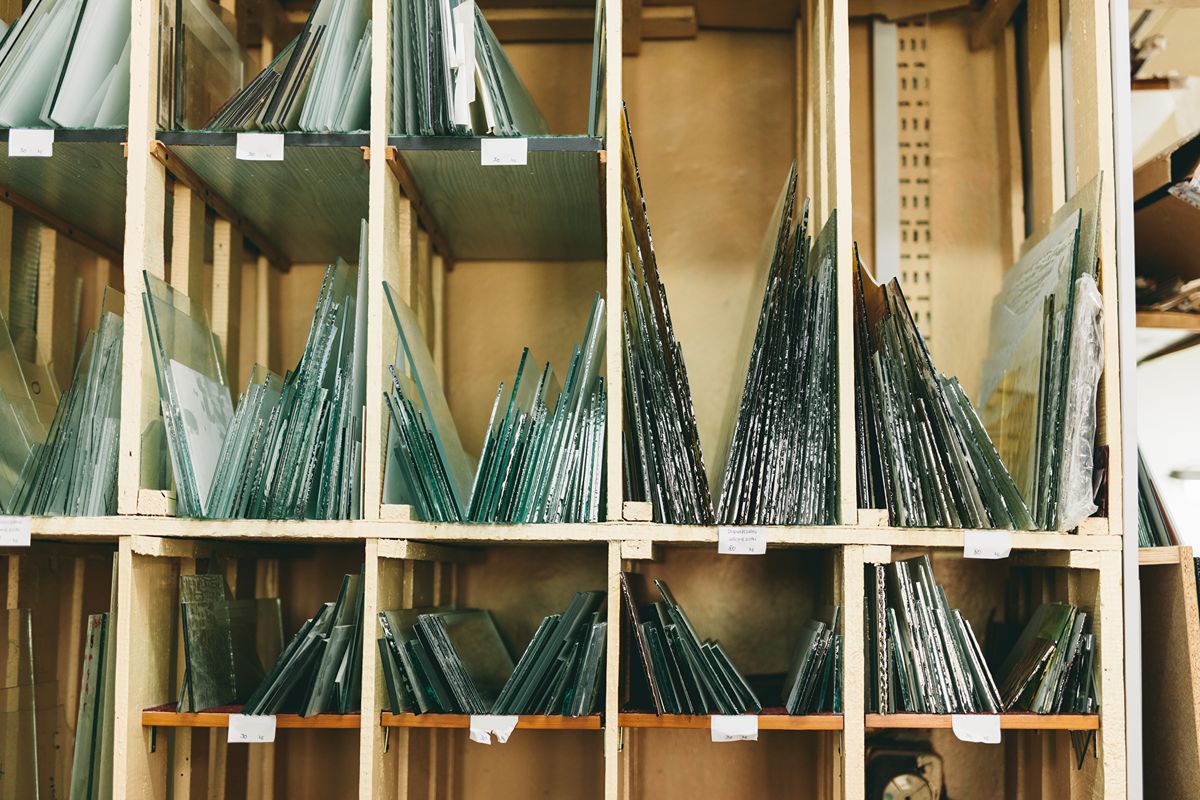
Glass is widely used to introduce transparency and visual openness within built environments. Unlike opaque building materials, it allows controlled passage of natural light while maintaining physical separation between spaces. This is an important component in modern architectural design where visibility and spatial experience are key considerations.
Here are several glass materials commonly used:
- Laminated Glass: Used for skylights, curtain walls, balustrades, and overhead glazing systems that enhance safety, sound insulation, and impact resistance.
- Frosted Glass: Used for interior partitions, bathroom enclosures, and privacy panels to allow light transmission while reducing visibility between spaces.
- Tinted Glass: Used for exterior glazing systems and sun-exposed façades to help reduce glare, heat gain, and UV penetration while maintaining visual clarity.
Key Takeaway
The common construction supplies used in decorative builds serve distinct roles in structural support, form creation, finishing, and functional detailing. Which is why understanding each material is essential for efficient project execution.
With over four decades of industry experience, Metal Exponents provides a dependable supply of high-quality steel products designed to meet the demands of diverse structural and industrial applications. Connect with our team today.